

Scottish Deerhound
- Giant
- Hound Group
- Popularity rank 156
The Scottish Deerhound is a giant coursing hound with a wiry coat and a Greyhound's lanky grace. Scottish Deerhounds are dignified and gentle at home, need room to run, and respond to calm, patient handling.
- Height
- 28 to 32
- inches at the shoulder
- Males 30 to 32 in
- Weight
- 75 to 110
- pounds, adult
- Males 85 to 110, females 75 to 95 lb
- Life expectancy
- 8 to 11
- years, median 9.5
- Senior from
- 7.1
- years, about
Senior starts in the last quarter of a breed's expected lifespan, following the 2019 AAHA canine life stage guidelines. Individual dogs vary.
About the breed
- Temperament
- Dignified, gentle, polite
- Coat
- Double, Wiry, medium
- Origin
- United Kingdom
- Recognized
- 1886
2015: rank 152, 2016: rank 154, 2017: rank 168, 2018: rank 158, 2019: rank 151, 2020: rank 166, 2021: rank 158, 2022: rank 155, 2023: rank 171, 2024: rank 165, 2025: rank 156
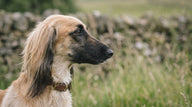
The Scottish Deerhound is a coursing hound with a Greyhound-like build but greater size and substance. Full-grown, it stands 28 to 32 inches at the shoulder and weighs 75 to 110 pounds. A tapered head and long neck add lift to an already stately frame.
As a sight hound, the Deerhound carries a wiry coat like the Irish Wolfhound and a lanky build like the Greyhound. The crisp coat comes in several colors, with breed enthusiasts favoring a dark blue-gray. Scottish Deerhounds are dignified, gentle, polite, and easygoing at home.
The breed's modern origins trace to Scotland as early as the 1500s, when these dogs were bred to course deer across the Highlands. That heritage stays visible today in their drive to run and their independent, self-directed nature.
Temperament and needs
Scored 1 to 5 for the breed overall. Individual dogs vary.
- Affectionate with family5 out of 5
- Good with young children3 out of 5
- Good with other dogs5 out of 5
- Openness to strangers3 out of 5
- Playfulness3 out of 5
- Watchdog and protective nature3 out of 5
- Adaptability3 out of 5
- Trainability3 out of 5
- Energy level3 out of 5
- Mental stimulation needs3 out of 5
- Barking level1 out of 5
- Shedding3 out of 5
- Grooming frequency1 out of 5
- Drooling1 out of 5
Care
The routines that matter most for this breed. Open one at a time.
Nutrition
The Scottish Deerhound does well on a high-quality dog food, whether commercially made or home-prepared with your veterinarian's supervision. Match the diet to the dog's life stage (puppy, adult, or senior), and keep clean, fresh water available at all times. Some Deerhounds gain weight easily, so watch calorie intake and use treats in moderation.
Feed an adult two meals a day, usually morning and evening. Puppies need a large-breed puppy formula, ideally three to four times a day for proper development. Follow the guidelines on the food you choose for a starting amount based on your dog's weight, and ask your veterinarian for guidance specific to your dog.
Because this breed is prone to bloat, several smaller meals are preferable to one large one. To reduce that risk, feed from a slow-feeder bowl or puzzle toy, skip elevated food bowls, and avoid strenuous exercise directly before or after eating.
A complete-and-balanced diet usually supplies the nutrients a healthy dog needs. Your veterinarian may still suggest specific supplements for your dog's situation, so never add one without checking with your vet first.
Grooming
The Scottish Deerhound's harsh, wiry double coat is easy to care for. An all-over brushing and combing about once a week suits most dogs, and a little more often if the coat picks up debris from tall grass or the woods. Coat thickness varies between individuals, so heavier coats need more regular attention than thin ones.
The wiry coat resists matting, and regular brushing removes dead hair and spreads the coat's natural oils. The double coat also protects the skin well, so frequent bathing isn't needed. Bathe only when the dog is very dirty or muddy, which also helps with any doggy odor. A slicker brush, a fine-toothed metal comb, and a nail grinder or clippers are useful tools to keep on hand.
Trim the nails every few weeks if they don't wear down on their own. Provide regular dental care with at-home brushing and professional cleanings.
Check the ears regularly for signs of infection and contact your veterinarian if anything seems off, and look at the eyes for cloudiness or irritation. The breed grows long, wispy hairs around the face and brow, so an occasional trim keeps hair from blocking vision. During grooming, check for new lumps or skin changes.
Exercise
Puppies and adults need daily opportunities to run freely. Deerhounds are otherwise fairly low-energy but still need at least 30 minutes of activity twice a day. Long walks or jogs and safe space to roam suit the breed.
Raising a Deerhound puppy well takes a large, securely fenced area, and ideally a companion playmate. This is not a breed that can be crated all day while the owner works; destructive puppies are usually not getting enough exercise. Avoid forced exercise, such as running alongside a bike, with immature hounds whose bodies are still developing.
Puppies and adolescents can be big, strong, and sometimes destructive, but by around age two most settle into calm, loyal companions. Older Deerhounds get lazier, as most dogs do, yet regular exercise stays important into their senior years to maintain fitness. Scottish Deerhounds have specialized exercise and management needs that may challenge first-time owners.
Training
The Scottish Deerhound is a sensitive, gentle breed that responds best to positive, reward-based training. The breed is easily stressed and does not do well kenneled, crated during the day, or left alone for long periods.
Deerhounds are smart and learn cues quickly; the harder part is motivation. Deerhounds are independent and do not have a strong desire to please. Varied, reward-based training can help maintain their attention. Scottish Deerhounds were bred to hunt independently away from the handler and may rarely check back for approval. Don't mistake that independence for willfulness, and keep sessions varied, since they bore easily when a task isn't challenging enough.
Begin Scottish Deerhound socialization early with people, pets, and children. The Deerhound enjoys its family and is patient with kids, though its size can intimidate small children, so supervise interactions. Indoors it is quiet and dignified, but a strong prey drive means it will chase furry animals that run past. Exercise on leash or in a fenced area, and take extra care around smaller household pets such as cats.
Health conditions
5 conditions are documented for the Scottish Deerhound.
A predisposition is not a diagnosis. Ask your vet which screenings make sense for your dog's age.
- Bloat (Gastric Dilatation-Volvulus)Digestive
- Dilated CardiomyopathyHeart
- Factor VII DeficiencyBlood
- HypothyroidismHormonal
- OsteosarcomaCancer

Sources
Thank you. Your report is in, and we will check this page.
Longevity & Vitality soft chew
Longevity & Vitality is a daily chew built on five active ingredients. Each chew carries Turkey Tail at 600mg, Curcuvet® curcumin at 75mg, Quercefit® quercetin at 40mg, Fibalance® at 275mg and EpiCor® at 50mg. The daily serving follows your dog's weight, from half a chew to three.
