
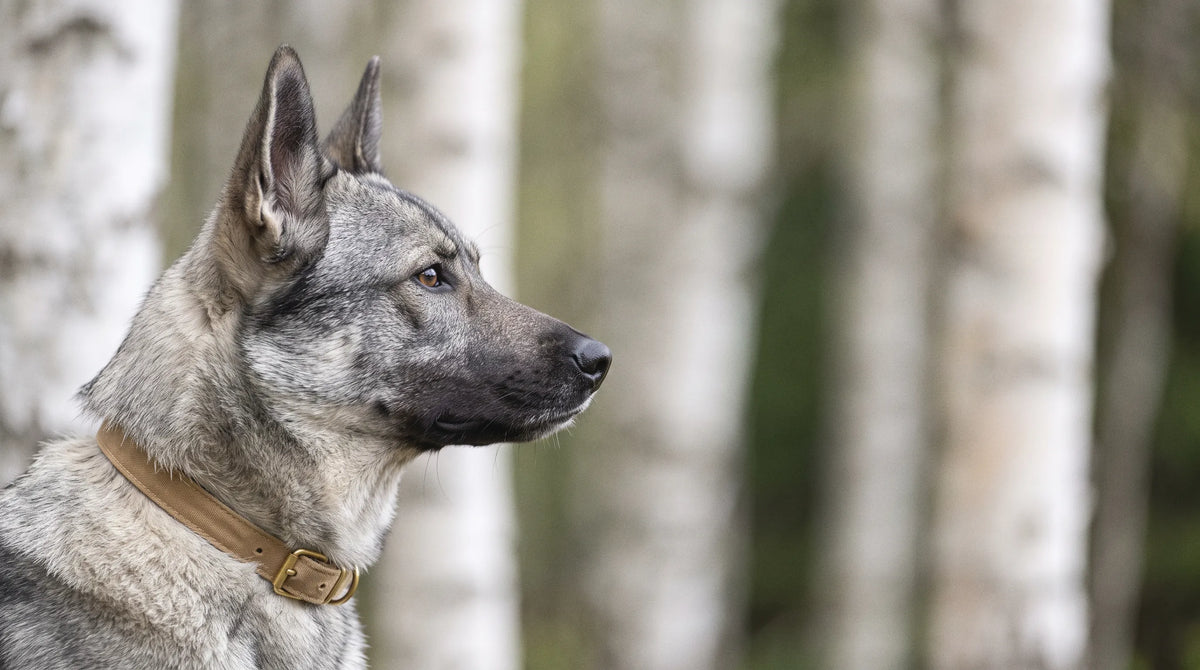
Swedish Elkhound (jämthund)
- Medium
- FCI Group 5 (Spitz and primitive types)
The Swedish Elkhound, or Jamthund, is an ancient Arctic Spitz. Intelligent, independent, and loyal, this medium-sized hunter stands 20 to 26 inches, has high exercise needs, and suits an active family.
- Height
- 20 to 26
- inches at the shoulder
- Weight
- 50 to 65
- pounds, adult
- Life expectancy
- 12 to 15
- years, median 13.5
- Senior from
- 10.1
- years, about
Senior starts in the last quarter of a breed's expected lifespan, following the 2019 AAHA canine life stage guidelines. Individual dogs vary.
About the breed
- Origin
- Sweden
- Recognized
- 1954
The Swedish Elkhound, known as the Jamthund, is an ancient Spitz-type dog from the Jamtland region of Sweden that takes its name from. It is a medium-sized breed, standing 20 to 26 inches tall and weighing 50 to 65 pounds, and larger than many related Elkhounds, including the Norwegian. Its body is rectangular, with a long, broad head, a wide muzzle, and dark, expressive eyes.
Bred to hunt elk and other large game in harsh northern conditions, the breed was prized for its strength, endurance, and ability to withstand the Arctic cold. It is intelligent, independent, and alert, carrying a high prey drive alongside a reputation for loyalty to family. It can be stubborn and overbearing with other dogs, yet calm and affectionate at home, and its patient nature means it does not annoy easily.
The Swedish Elkhound was recognized as a distinct breed in 1954, separating it from the Norwegian Elkhound, though one major US kennel registry's northern breed group did not accept it until 2006.
Care
The routines that matter most for this breed. Open one at a time.
Nutrition
For an adult Swedish Elkhound, general veterinary guidance calls for complete and balanced food suited to the dog's life stage, activity, body condition, and health. Each serving should be measured, while weight and body condition should be monitored so the amount can be adjusted as needs change. Fresh, clean water should always be available and replaced daily. Unexpected weight changes and major diet decisions should be discussed with a veterinarian.
A Swedish Elkhound puppy entering a new home should stay on the breeder's feeding plan, or on the food it already knows, unless there is a reason to change a plan that is working well. In a household with children, the puppy should be allowed to eat and drink undisturbed. As a matter of general puppy food safety, a Swedish Elkhound puppy should not be given chocolate, grapes or raisins, poultry bones, unrisen dough, or onion.
Grooming
The Swedish Elkhound's coat is relatively long. Brushing every few days removes dead hair and keeps the coat in good condition.
Bathing is rarely necessary unless your dog gets into something messy. Round out the routine with regular nail trims and tooth brushing.
Exercise
Swedish Elkhounds are quick, agile dogs, and like most hunting breeds they need regular exercise to stay mentally and physically fit. Their stamina lets them work for long stretches in all kinds of weather. Aim for moderate to vigorous activity for about half an hour every day to meet their physical and mental needs.
A fenced yard is a must if your dog will play outside at home, and a leash is best when you run or hike together. Swedish Elkhounds can become destructive when bored or confined indoors for long periods.
Training
The Swedish Elkhound is eager to please and generally responds well to training. These dogs love having a job and learn quickly, and reward-based methods work most effectively.
Early socialization can keep a Swedish Elkhound from growing reactive toward other dogs or overly protective around strangers. Consistent, determined training helps curb the natural instincts that can conflict with family life. The breed tends to get along well with children, thanks in part to a protective streak.
Health conditions
13 conditions are documented for the Swedish Elkhound (jämthund).
A predisposition is not a diagnosis. Ask your vet which screenings make sense for your dog's age.
- Bloat (Gastric Dilatation-Volvulus)Digestive
- CryptorchidismUrinary & Reproductive
- Diabetes MellitusHormonal
- EpilepsyNervous System & Behavioral
- GlaucomaEye
Show all 13 conditions Show fewer
- Hip DysplasiaBone & Joint
- HypothyroidismHormonal
- Mammary NeoplasiaCancer
- OsteochondrosisBone & Joint
- Patellar LuxationBone & Joint
- Perineal HerniaDigestive
- Pulmonary EdemaAirway & Lung
- Umbilical HerniaDigestive
Sources
Thank you. Your report is in, and we will check this page.
Longevity & Vitality soft chew
Longevity & Vitality is a daily chew built on five active ingredients. Each chew carries Turkey Tail at 600mg, Curcuvet® curcumin at 75mg, Quercefit® quercetin at 40mg, Fibalance® at 275mg and EpiCor® at 50mg. The daily serving follows your dog's weight, from half a chew to three.
